The human body is highly adaptable, it’s biological mechanisms have refined over millions of years in efforts to stay alive. Intuitively then, we have alternate means of supplying ourselves with energy. However it’s not as simple as abruptly switching fuel sources and disrupting our delicate biochemistry; This is essentially what the ketogenic diet is designed to do.
The keto diet promotes an altered state of ketosis as a method for immediate weight loss and energy gain. In ketosis, the body converts stored fat into useable energy and naturally, ketosis is a survival mechanism designed for detoxification, not a “biohack” that can be taken advantage of indefinitely without consequence. During naturally induced states of ketosis, our ancestors had empty stomachs, not frequent high-calorie intakes.
When the staple plant-based energy sources like legumes, alkalizing grains, and tubers were scarce, and generally within three days of not eating at all, our bodies would enter true ketosis and begin to break down ketone (fat) deposits within our tissues as a temporary source for energy but this process also released & expelled fat-bound toxins & revitalized our internal organs. This process is known as fasting.
In contrast, the keto diet thrusts the body into a permanent dietary-fat-burning-state, and because the fats being used for energy are not the body’s own deposits, as in a fast, the G.I. tract never gets a break and is constantly absorbing the abundant fat-soluble toxins in animal products. Digestion robs the body of the opportunity & energy to release these fat-bound toxins.The frequent consumption of animal fats and proteins also feeds acid-forming gut microbes, and often the metabolic toxins that these microbes produce accumulates and damages our digestive system. This is significant because our body contains far more microbial cells than human cells.
For instance, eggs have large quantities of choline, and meats have excessive carnitine, both of which are metabolized by “bad” gut microbes into TMA. Our liver readily assimilates this molecule and oxidizes it into TMAO, a free radical that is a known carcinogen (cancer-causing).
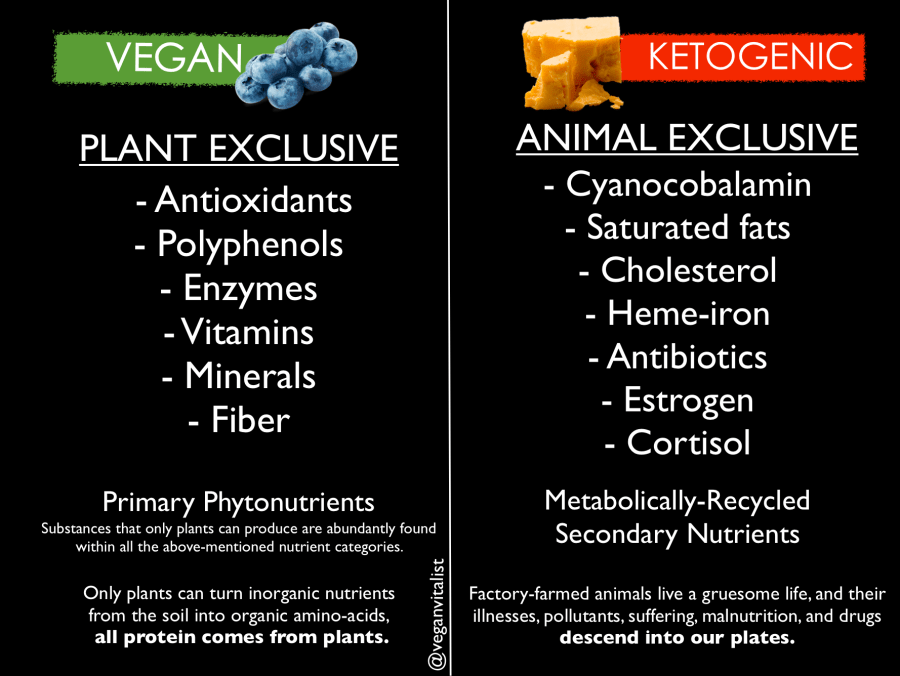
Through the consumption of animal meats, the body also accumulates heme-iron (causes oxidative damage), natural hormones (cortisol, adrenaline, bovine estrogen & estradiol, etc.), natural growth factors; IGF-1 & VEGF (both known to induce carcinogenesis), Casein (Inflammatory protein constituting the bulk of cow’s milk & highly concentrated in cheeses. It targets the same opioid receptors in the brain as heroine. Casein is acid-forming when it is digested and metabolized.), pesticide residue (the most concentrated dietary sources of pesticides are meat, dairy & eggs.), Neu5Gc (a sialic acid molecule foreign to humans which triggers chronic inflammation.), Xenoestrogens (not only do meat, dairy & eggs all contain actual animal estrogen & other hormones, they are also the highest dietary source for synthetic pollutants & pesticides that mimic the effect of estrogen in the human body & impair hormonal balance. The combined effect of both of these kinds of hormones is devastating to the endocrine system.), Heavy metals (Meat, dairy, & eggs are the most concentrated dietary sources of neurotoxic heavy metals like mercury & aluminum, endocrine disruptive heavy metals like arsenic & lead, & many more.), and pollutants;PCB’s, PFC’s, and Dioxins, of which the most concentrated dietary source is also meat, dairy, and eggs.)
 This lifestyle requires fat to be a large portion of our caloric intake, which at first will counterintuitively result in weight loss, but in the long term becomes a problem due to our unique physiology, and again, our body knows best. It’s colon size, stomach pH, gut flora, and biochemical processes are not suited to consume animal protein & fat.
Not only does the keto diet entail large amounts of cholesterol intake daily, a nutrient we have no dietary need for, but the cholesterol in animal-based foods is readily assimilated as LDL cholesterol, which is a potent risk factor for atherosclerosis, the precursor for America’s number one killer; heart disease. Also, all industrially farmed animals are supplemented with Cyanocobalamin; (synthetic form of vitamin B12, it contains cyanide and is toxic to the body).
This lifestyle requires fat to be a large portion of our caloric intake, which at first will counterintuitively result in weight loss, but in the long term becomes a problem due to our unique physiology, and again, our body knows best. It’s colon size, stomach pH, gut flora, and biochemical processes are not suited to consume animal protein & fat.
Not only does the keto diet entail large amounts of cholesterol intake daily, a nutrient we have no dietary need for, but the cholesterol in animal-based foods is readily assimilated as LDL cholesterol, which is a potent risk factor for atherosclerosis, the precursor for America’s number one killer; heart disease.
References
1. Statins as a means of intervening poor diets high in fat and refined carbohydrates.
https://www.ncbi.nlm.nih.gov/pubmed/20691321
2. Tolerable upper intakes for trans fat, saturated fat, and cholesterol.
https://www.ncbi.nlm.nih.gov/pubmed/21521229
3. low-carbohydrate diets and all-cause mortality.
https://www.ncbi.nlm.nih.gov/pubmed/23372809
4. Effects of a high-fat low-carb diet on patients with increased risk for atherosclerosis.
https://www.ncbi.nlm.nih.gov/pubmed/22850317
5. Treating hyperlipidemia with a low-fat high-carb diet.
https://www.ncbi.nlm.nih.gov/pubmed/7495312
6. The effect of high-protein diets on coronary blood flow.
https://www.ncbi.nlm.nih.gov/pubmed/11108325
7. Low-carb diets on CV risk factors, (yes we should always see both sides)
https://www.ncbi.nlm.nih.gov/pubmed/22905670
8. Comment on the study above, discerning between the purported benefits and possible side effects of a low-carb diet.
https://www.ncbi.nlm.nih.gov/pubmed/23294905
8. Dietary cholesterol and triglyceride restriction induced significantly decreased risk for atherosclerosis.
https://www.ncbi.nlm.nih.gov/pubmed/10959514
9. Dietary antioxidants and the ancestral human necessity of phytonutrients.
https://www.ncbi.nlm.nih.gov/pubmed/14527634
10. Similarities of prostate and breast cancer with respect to the human diet.
https://www.ncbi.nlm.nih.gov/pubmed/11295592
11. High-fat and Low-carb diets and mortality among myocardial infarction survivors.
https://www.ncbi.nlm.nih.gov/pubmed/25246449
12. Why foods of wild primates have relevance to modern health.
https://www.ncbi.nlm.nih.gov/pubmed/10906529
13. Micronutrient intakes of wild primates; are humans different?
https://www.ncbi.nlm.nih.gov/pubmed/14527629
14. Low-carbohydrate diets and possible psychological dietary implications; perceptions of healthiness.
https://www.ncbi.nlm.nih.gov/pubmed/25490960
15. Hunter-gatherer diets; a different perspective.
 THE VITAL TRUTH